
On Stage
Productions & Tickets
Here’s what’s coming up!
✦ Now booking
Our next production
Script kindly presented in agreement with www.alexjacksonpantomimes.com
Our 60th Anniversary Pantomime
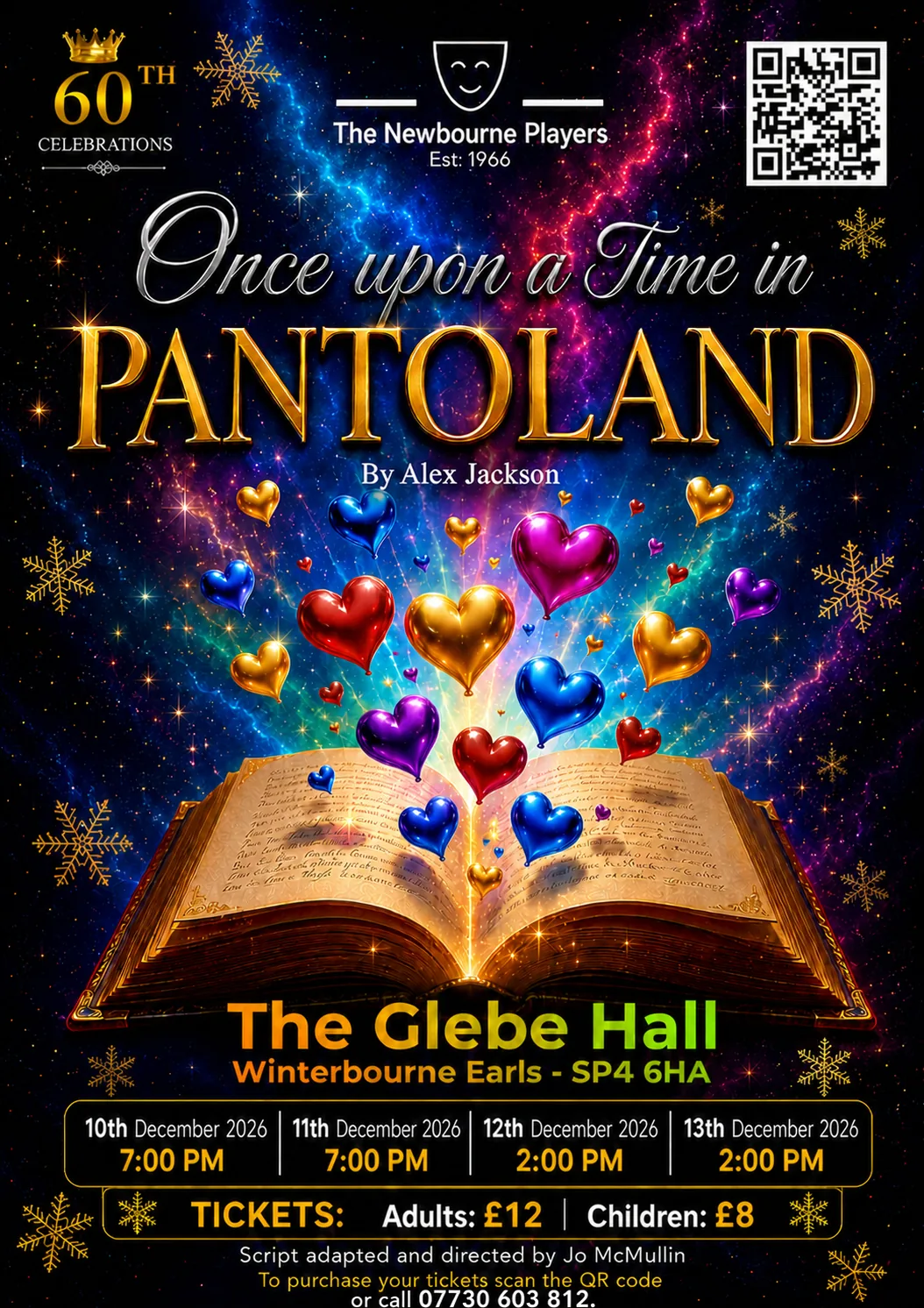
Once Upon A Time in Pantoland
by Alex Jackson · Directed by Jo McMullin
Welcome to Pantoland — where every fairytale you ever loved collides in one gloriously chaotic adventure! When the evil witch, Mouldywart, threatens to steal the Spirit of Pantomime forever, it’s up to the fearless Tilly Tickle — helped by Prince Harry, PC Pete and his trusty dog, Baxter, and the Fairy Grandmother herself — to save the day. Expect boo-worthy baddies, a magic fountain, slapstick comedy, musical numbers and enough audience participation to wake the whole of Wiltshire.
- Thursday 10th December 20267:00 PM
- Friday 11th December 20267:00 PM
- Saturday 12th December 20262:00 PM
- Sunday 13th December 20262:00 PM
Venue
Glebe Hall, Winterbourne Earls, SP4 6HA
Behind the scenes
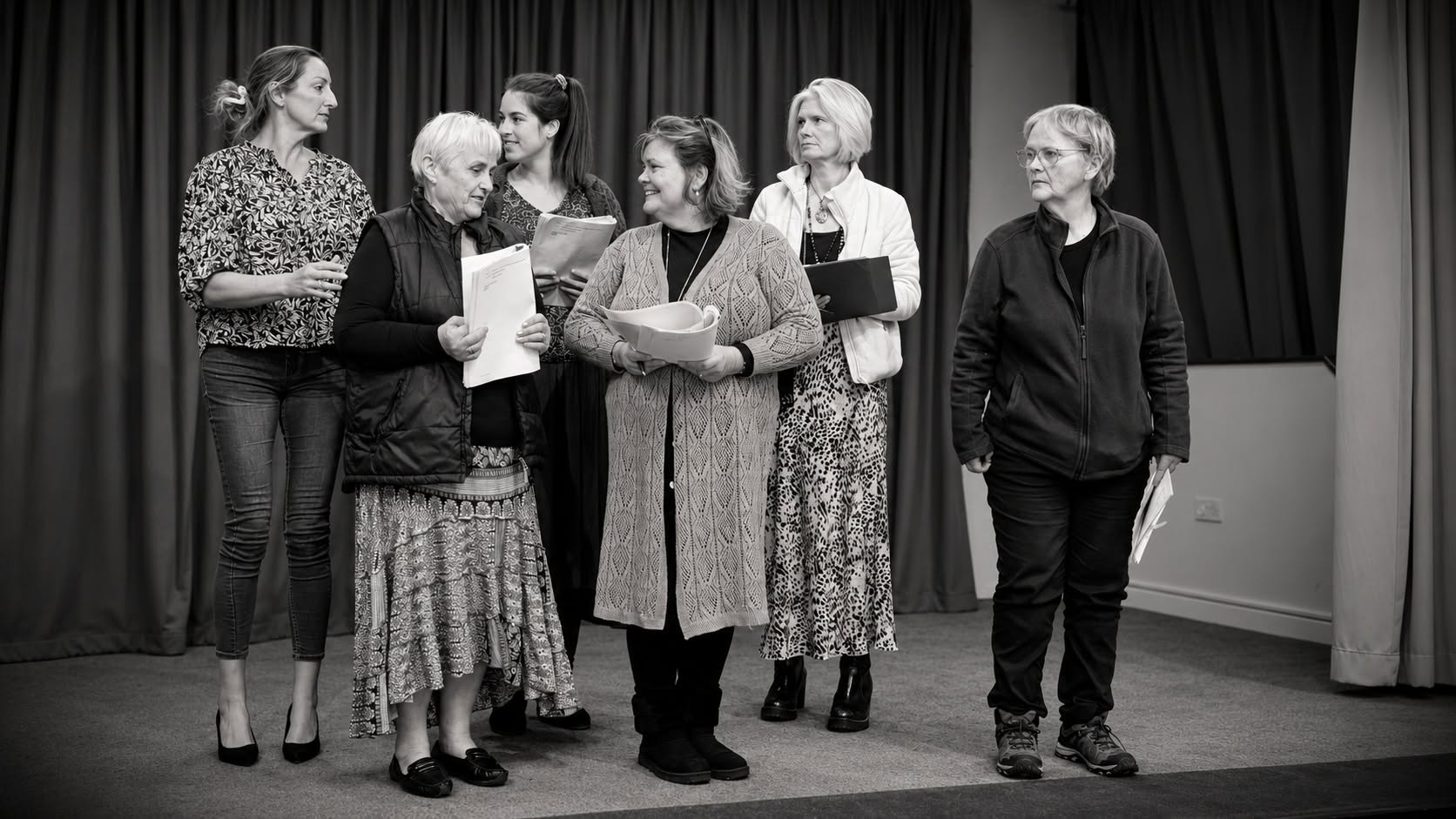
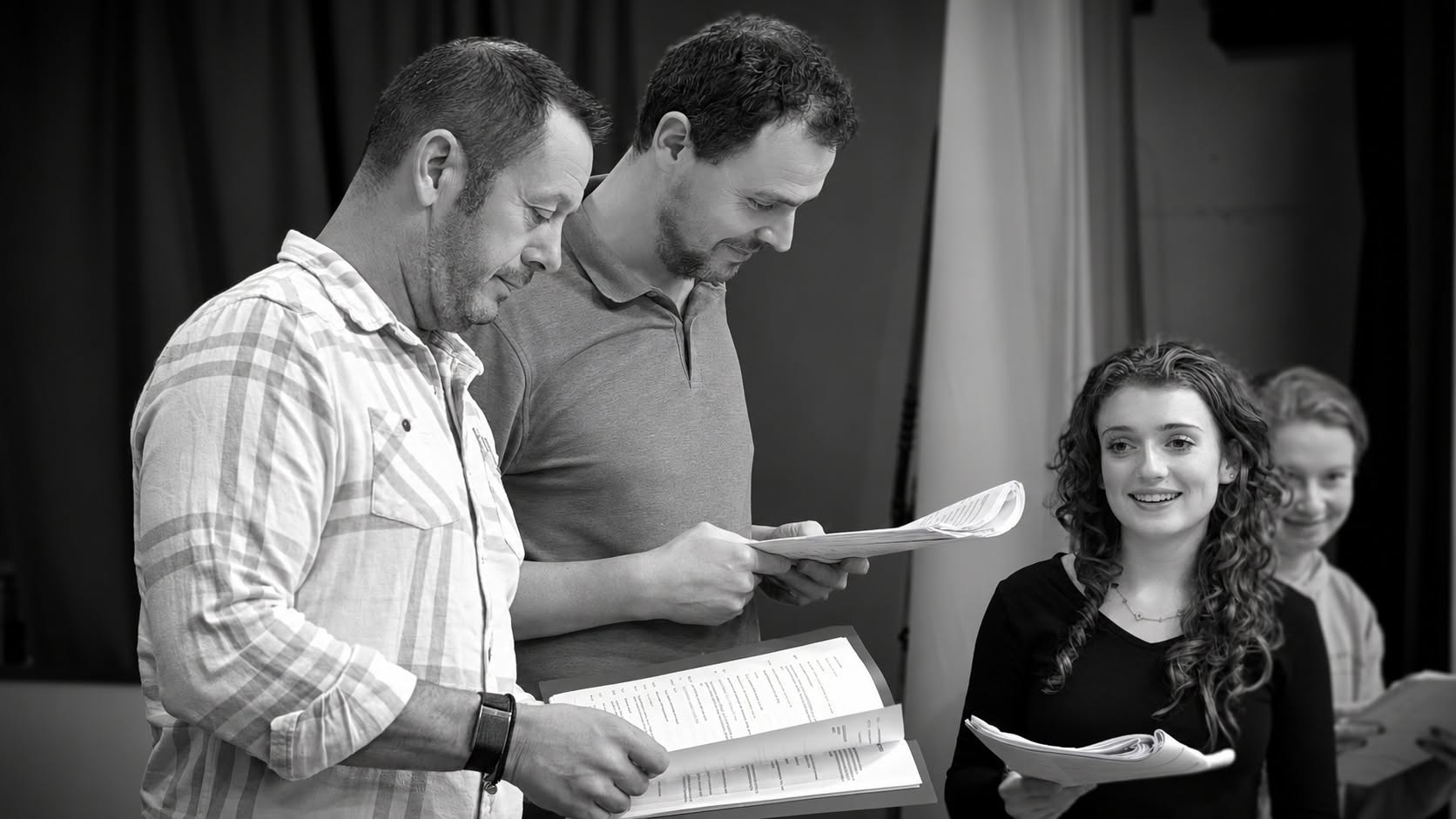
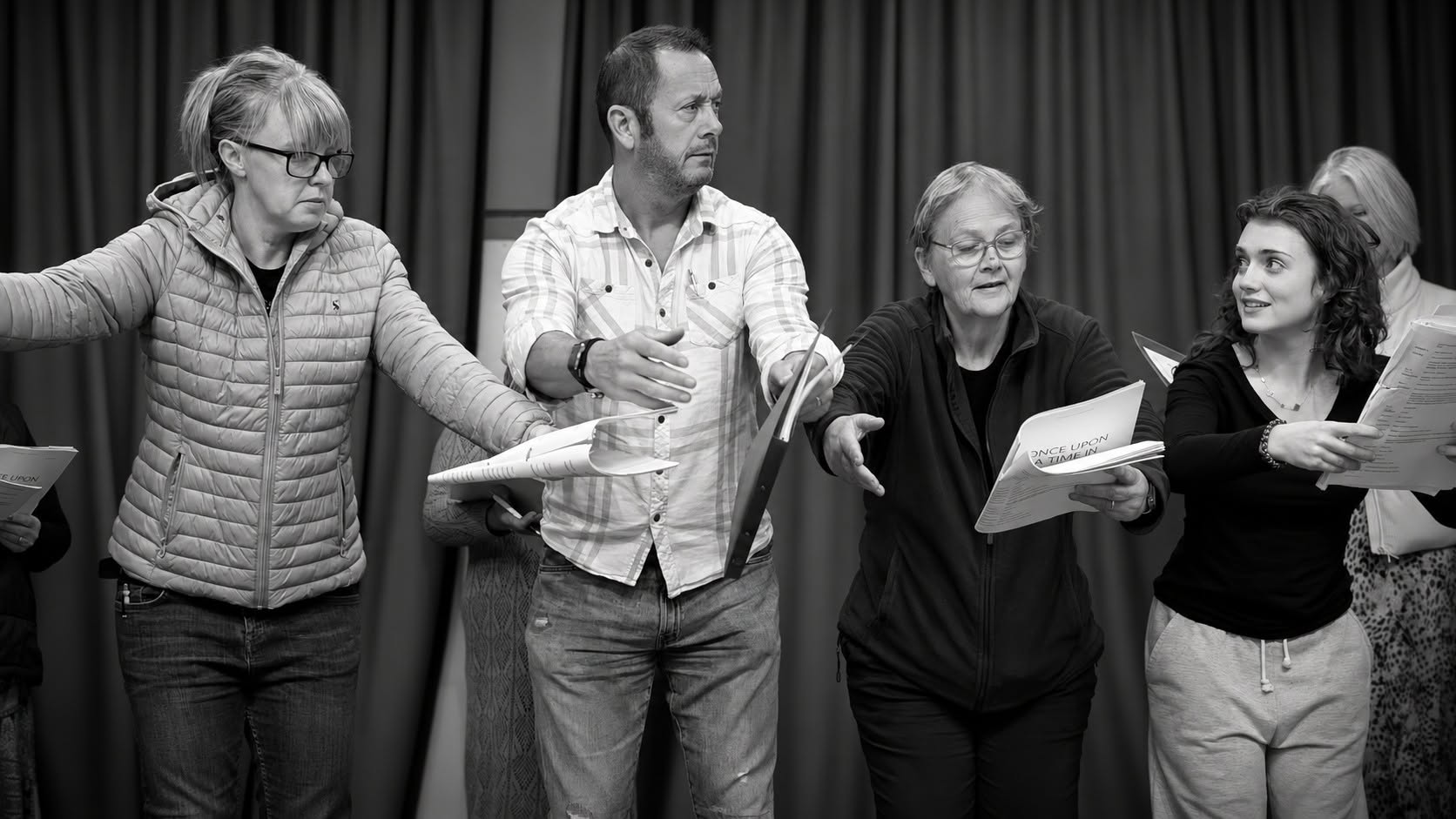
Pantoland in rehearsal
The company at work in Glebe Hall on 7 October 2026. Photography by Martin Joint.
✦ About the Writer
Alex Jackson
Alex Jackson grew up just outside Exeter, where he first caught the pantomime bug watching productions at the Exeter Northcott Theatre. He has since licensed hundreds of scripts across the UK and internationally, from Singapore to New Zealand, earning multiple NODA "best pantomime" awards along the way. He’s also a founding trustee of the UK Pantomime Association, which runs the annual Pantomime Awards.
Once Upon A Time in Pantoland has become one of his most requested titles: it was written in 2021 for a theatre company eager to bring their pantomime back after Covid-19 restrictions lifted — a script written from outline to finished draft in just three months. Setting it in "Pantoland" itself let him weave in familiar faces — a nod to Aladdin’s policeman, Cinderella’s Fairy Godmother reimagined, and a magic mirror borrowed from Snow White — while giving the traditional principal girl a fresher, feistier edge. At its heart, Alex says, is a simple message: love and laughter always win the day.
The Newbourne Players are delighted to be performing a third production written by Alex.

A brief history of pantomime
Panto is older than it looks. Its roots trace back to commedia dell'arte in 16th-century Italy, with its stock characters and slapstick comedy, and to the English Harlequinade tradition that grew up alongside it in the 1700s. By the Victorian era, these had fused with music hall and fairytale into something distinctly British — a raucous, unpretentious, family entertainment, staged every Christmas, built around a story everyone already half-knew. The name itself comes from the Greek pantomimos, ‘imitator of all,’ a nod to performers who once told these stories through gesture and mime alone, long before the songs, shouting and custard pies took over.
What's lovely is how many of panto's traditions have barely changed since then — and we still follow most of them ourselves. The principal boy, the young hero of the piece, has traditionally been played by a woman; the pantomime dame is always a man, usually in the loudest costume and biggest wig in the building, and reliably walks away with the best laughs of the night. Then there's the audience — panto's real secret ingredient. ‘He's behind you!’, ‘Oh no it isn't!’, cheering the hero and booing the villain the moment they set foot on stage: all of it descends from the music hall habit of talking straight back to the performers, and it's often a child's very first experience of live theatre responding to them.
A few other survivors are worth watching out for too: the slapstick chase, named for the wooden ‘slap stick’ that cracks loudly on impact, straight out of commedia dell'arte; the transformation scene, where a fairy godmother or good spirit changes the hero’s fortunes with a wave of a wand and a puff of stage smoke; and the sly habit of slipping in jokes about whatever's happened this year, whether or not it has anything to do with the story. It's a format that's stayed cheerfully, stubbornly itself for over 150 years — which is probably exactly why it's still packing out village halls like ours every December.